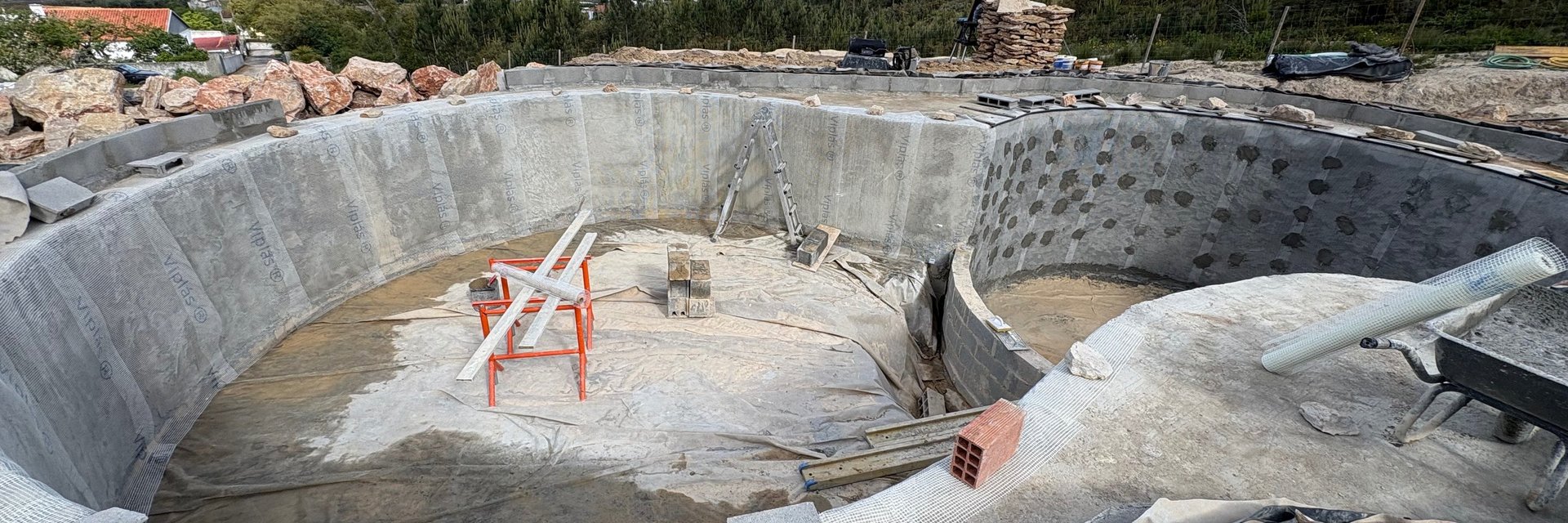
Every great natural pool starts with a plan — one that respects the land, anticipates future needs, and captures a personal vision. Whether you're starting small or thinking big, the planning stage is where dreams become buildable realities.
Start with vision, not excavation
The most common planning mistake is rushing to the technical before the conceptual is resolved. Before thinking about pumps, filtration or lining methods, get clear on what you actually want from the space. A swimming experience that feels like a mountain lake? A formal architectural feature? A habitat pond with a small swim zone?
Natural pools don't rely on chlorine — they rely on biological filtration, plant life, and flow systems designed as a coherent ecosystem. A well-planned system mimics a healthy natural environment and keeps itself balanced. A poorly planned one — however well-built — will always fight against its own design.
Key principle: Avoid trying to hybridise a natural pool with traditional pool systems. It almost always leads to imbalance, higher maintenance and disappointment. Plan the system as a whole from the beginning.
Step 1 — Choose the right site
Where you place your pool has more influence on its success than almost any other factor. Consider:
- Sunlight — most aquatic plants need full sun to thrive. A shaded pool will struggle to maintain biological balance and tends toward algae
- Trees — avoid locating a pool beneath large trees. Leaf drop increases organic load dramatically; root systems can damage liners over time
- Slope and elevation — a slightly sloped site often allows for natural cascades, waterfalls or terraced design. It also affects excavation complexity and drainage
- Proximity to buildings — minimum setbacks vary by region; ensure adequate distance from foundations
- Prevailing wind — wind direction affects debris accumulation and surface evaporation
Step 2 — Define your aesthetic
Natural pools span a wide spectrum — from formal geometric biopools that look like conventional pools to fully wild naturalistic environments that read as part of the landscape. Know which end of that spectrum suits your site and your architecture before you proceed.
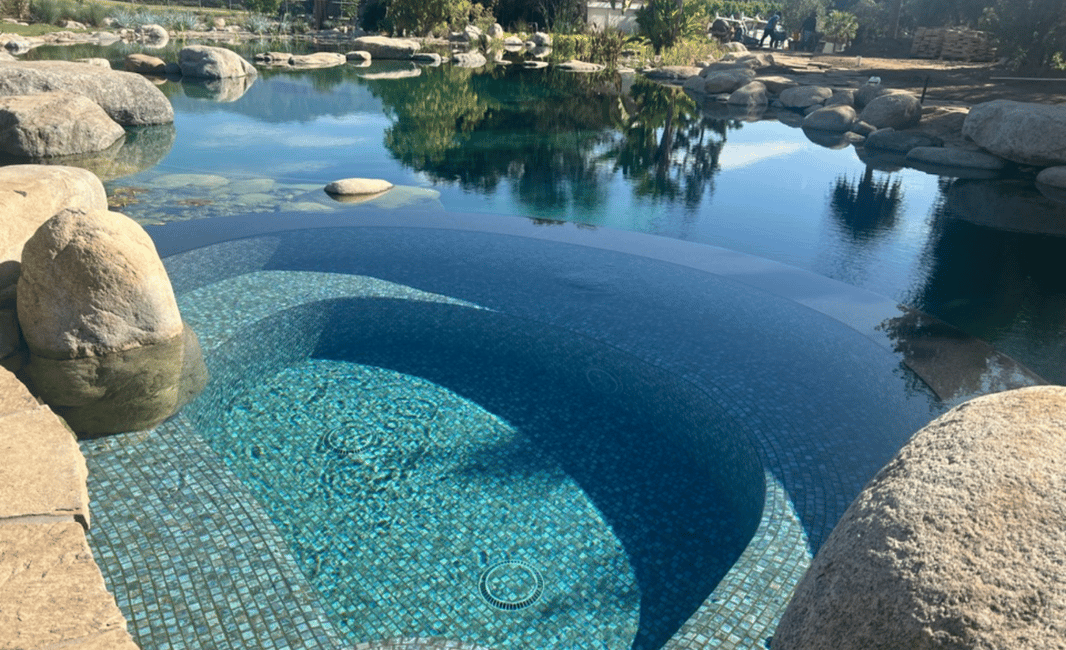
Materials define the character: local stone, regional timber, planted margins, clean retaining walls, or a mix. Plan the edges, pathways, entry steps, decking and visual transitions early in the design process — these elements define the swimming experience as much as the water itself.
Step 3 — Plan filtration and water flow early
Filtration is not an afterthought — it is the core of the system. Every natural pool requires:
- Mechanical pre-filtration — drum filter or sieve to capture large particles before biological filtration
- Biological filtration — BioBead, moving bed biofilm reactor, planted wetland, or a combination
- Circulation design — all zones must be oxygenated; dead spots create algae and stagnation
- UV-C sterilisation — not always required, but highly recommended for high bather load, warm climates or where clarity expectations are high
- Nanobubble oxygenation — optional but highly effective in larger volumes or shaded systems
Design your filtration system at the same time as your pool layout — not afterward. The plumbing routes, equipment locations and access points need to be integrated into the construction plan from day one.
Step 4 — Understand zoning, permits and legalities
In Portugal and most other countries, natural pools require some form of approval before construction. Requirements vary significantly by municipality, land classification and pool type.
- Know whether your site has zoning restrictions or limits on excavation
- Check whether water rights or drainage regulations apply
- Ask early: "Can this be classified as a pond, a pool, or a landscape feature?" — the classification affects which regulations apply
- In many regions, natural pools classified as ponds or water catchment features face significantly fewer bureaucratic hurdles than conventional chemical pools
Step 5 — Work with nature, not against it
The final planning principle is the most important. Natural pools that fail almost always do so because they were designed against their environment rather than within it. Design for seasonal variation — some plants go dormant in winter; plan for what the pool looks like year-round.
- Incorporate native plants and local materials wherever possible
- Use rocks, logs, terraces and submerged shelves to mimic natural transitions
- Plan for wildlife — frogs, dragonflies and birds are features, not problems
- Design the system to become more stable over time, not less