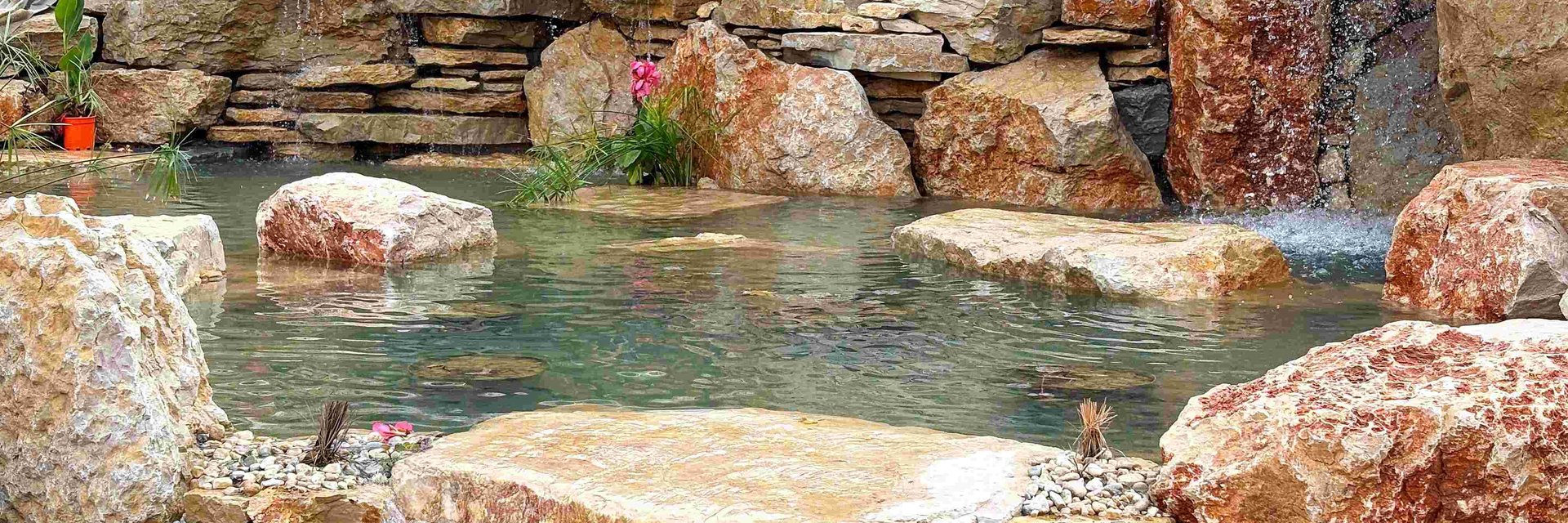
Too often, clients are sold a version of a chemical-free pool that still feels like a modern swimming pool: sharp lines, tiled edges, visible concrete. It's natural in function — but not in feel. Understanding why this happens is the first step toward building something genuinely different.
Why the disconnect happens
Most pool builders come from a conventional construction background. When they transition into natural pools, they replace the chemistry — but keep the visual language. Chlorine is swapped for plants. The structural logic remains identical.
The result is a pool that filters water biologically but looks indistinguishable from a conventional installation. Naturalism isn't just about how the water is filtered — it's about how the space is shaped, how the edges feel, how the pool meets the land.
Building in a genuinely naturalistic style requires extensive experience in advanced biomimetic design, artistic masonry, and ecological engineering. It's a rare specialty — which is why most natural pools fall short.
The three styles of natural pools
Not every natural pool needs to look wild. The right style depends entirely on the property, the architecture, and the client's vision. Understanding the spectrum helps you choose intentionally.
Formal Bio Pools
These look most like a traditional swimming pool. Clean edges, visible materials (tile, concrete, plaster), often rectangular. Natural in function — biological filtration, no chemicals — but conventional in aesthetic. Best suited for formal settings: urban gardens, modern villas, geometric architecture. If you want chemical-free water without changing the visual language of a conventional pool, this is the appropriate choice.
Hybrid Natural Pools
These combine clean swimming zones with more natural edge treatments. Details include curved regeneration zones with gravel and planting, natural stone coping instead of tiles, and a mix of straight and flowing lines. Works well for clients who want nature without losing design formality. A gateway between the conventional and the wild.
Naturalistic Pools
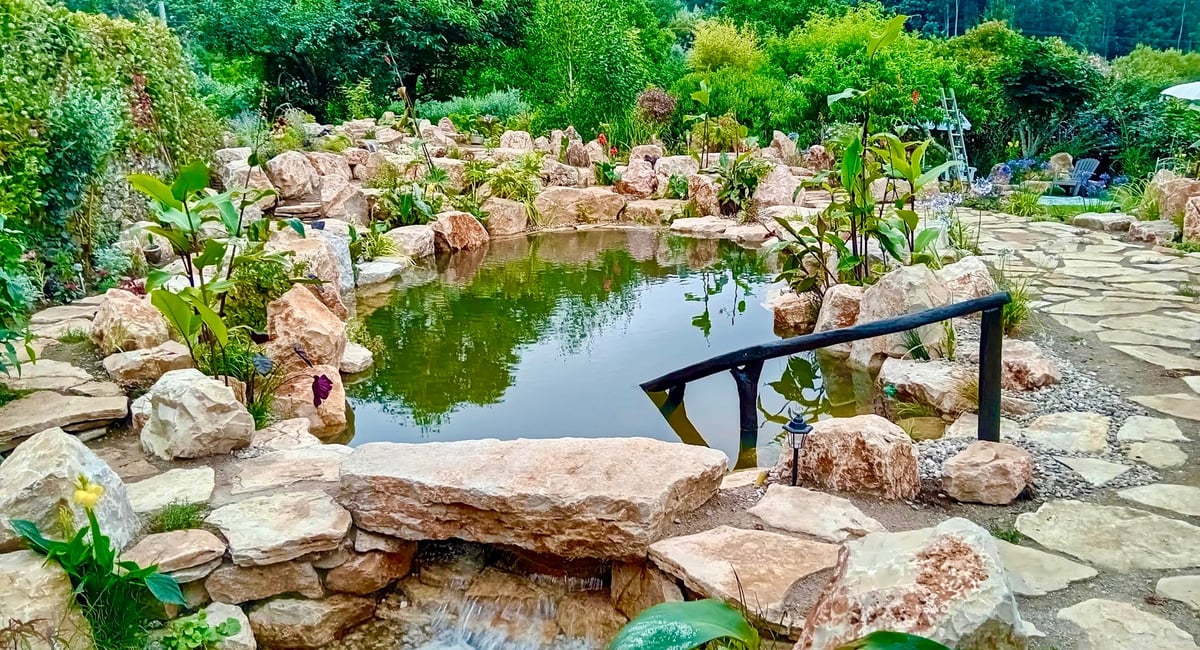
These look and feel like ponds or wild lakes. Designed with curving lines, no visible concrete, native planting, natural depth variation, and materials that weather into the landscape. Swimmers feel immersed in nature, not in a designed environment. The design disappears into its surroundings — often with meadows, terraces, and trees rather than paving and patio. This is Aqua Vitae's signature style.
Choosing the right style for your landscape
Not every project needs to be fully wild. A modern home may suit a hybrid or formal bio pool. A clean architectural statement can be as powerful as a naturalistic one.
But for clients with natural land, rural plots, or immersive gardens, a naturalistic pool makes the space feel alive and deeply rooted. The goal, in every case, is intention — not imitation.
The Aqua Vitae approach: A natural pool should feel like it belongs where it is — as if it's always been there. Whether you want crisp lines or soft edges, the key is intention. It's not about copying nature; it's about understanding it, and letting your pool become part of it. At Aqua Vitae, we design every type — from formal biopools to fully wild environments — but our signature is the naturalistic style, where structure disappears into the landscape.
What makes truly naturalistic design possible
The gap between a pool that looks natural and one that merely is natural comes down to craft — specifically, the intersection of ecological understanding, structural engineering and artistic masonry.
Aqua Vitae's proprietary method, developed over 25 years, integrates civil-grade construction with biomimetic design principles: water moving as it does in the wild, through gentle gradients and self-cleaning flow paths; materials chosen for their chemistry and their story; planting selected for ecological function, not just ornament.
When we finish a project, the goal is simple: it should look as though it's always been there.