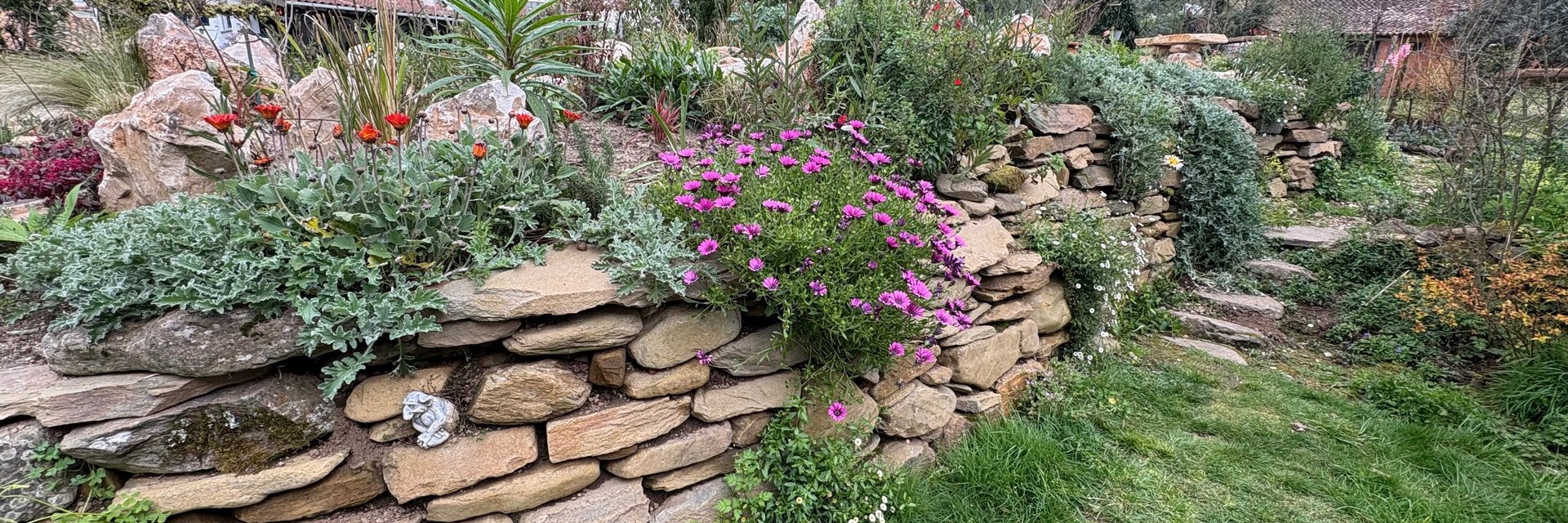
Designing a natural pool is fundamentally different from designing a conventional one. You're not just choosing a shape and a finish — you're designing an ecosystem. The decisions you make about filtration, depth, planting, flow and materials all interact with each other, and with the land. Getting them right from the beginning is what separates a pool that performs beautifully year after year from one that requires constant intervention.
Start with a clear vision
Before any technical decisions, get specific about what you want from the space. Ask yourself:
- Is this primarily for swimming, or equally for landscape and ecology?
- Do you want it to feel naturalistic and wild, or clean and architectural?
- How many people will swim regularly, and at what time of year?
- What does the surrounding landscape look like, and what materials already exist on the property?
- What's the budget ceiling — and are you flexible on timeline to get the right result?
These answers define every downstream design decision. Don't skip them.
Size and depth
Natural pools need more total surface area than conventional pools because they require filtration zones — either planted regeneration areas or compact biological filter space — in addition to the swim zone itself.
- Minimum swim depth: 1.5m for comfortable adult swimming
- Jumping depth: minimum 2.5m below any jump point
- Diving depth: minimum 3.0m
- Planted regeneration zone: typically 30–50% of swim zone area, or can be replaced by compact biofilter modules
- Shallow planting shelves: 15–30cm depth around edges for marginal aquatic plants
Don't undersize. A natural pool that's too small for its bather load will always struggle to maintain biological balance. When in doubt, build larger.
Choosing your style
The three primary natural pool styles each suit different sites, architectures and lifestyles:
Formal Biopool
Clean edges, geometric shape, contemporary finish. Natural in water quality — chemical-free — but conventional in appearance. Ideal for modern villas, formal gardens and urban properties where naturalistic design would feel out of place.
Hybrid Natural Pool
Combines a defined swim zone with natural stone edges, planted margins and softer lines. The most popular choice — bridges the gap between clean and wild. Works across a wide range of property types.
Naturalistic Swimming Pond
Fully immersive — organic shapes, no visible concrete, native planting, materials that read as part of the landscape. The most ambitious and most rewarding. Designed to look as though it has always been there.
Materials and finishes
Material choices define the character of a natural pool more than any other single decision:
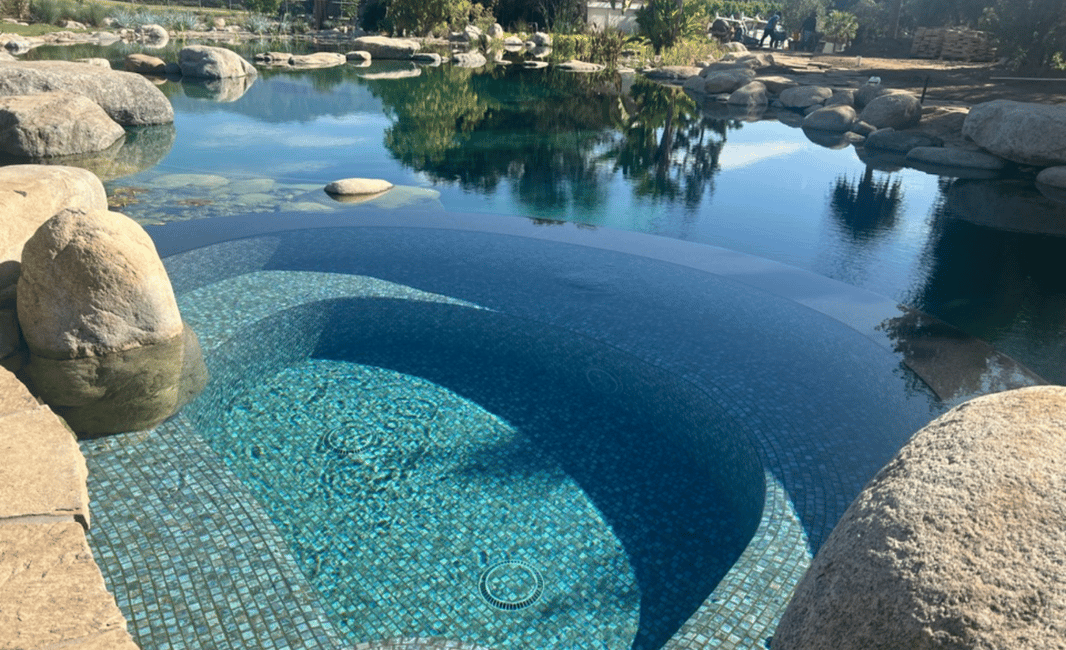
- Liner: EPDM rubber is the preferred choice for biological compatibility, flexibility and long-term durability. HDPE is also used in structural applications. Avoid PVC liners in naturalistic pools — they off-gas and are less ecologically neutral
- Stone and coping: Local stone — schist, granite, limestone — ages beautifully and grounds the pool in its landscape. Imported stone can work but feels disconnected from the site
- Gravel media: 8–16mm washed gravel is standard for planted zones and wetland filter beds. Avoid fine sand, which compacts and restricts flow
- Submerged surfaces: Dark gravel or dark liners create the appearance of depth and reflect the sky — far more naturalistic than pale plaster or pale tiles
Budgeting realistically
Natural pools are bespoke engineering projects. Budget varies significantly by country, complexity and specification:
- Portugal: from €40,000 for a new natural pool; from €15,000 for a conversion
- California / U.S.: from $65,000 depending on scale and specification
- Middle East: from €55,000 with heat management engineering
- UK: from £55,000 for a full natural pool installation
Below these figures, you are either looking at a very small system, a DIY installation, or a builder whose specification doesn't meet civil-grade engineering standards. Cheaper isn't better — it's a risk.
Aqua Vitae design service: A professional design package from Aqua Vitae gives you hydraulic schematics, material specifications, filtration engineering and full construction documentation. This package can be used to build with Aqua Vitae or with a trusted local contractor under our technical oversight — available worldwide. Design packages from €2,500.
The professional design process
A proper natural pool design isn't a sketch and a price. It's an engineered document. The process at Aqua Vitae:
- Consultation — review your site, vision, budget and goals. Identify the right pool type, filtration approach and style direction
- Concept design — layout, shape, filtration zone placement, entry points and landscape integration
- Technical design — hydraulic schematic, pump sizing, filtration specification, liner type, material schedule
- Construction documentation — build-ready drawings, material lists and contractor notes
Each stage builds on the last. Skipping straight to construction without a proper technical design is one of the most common and costly mistakes in natural pool building.