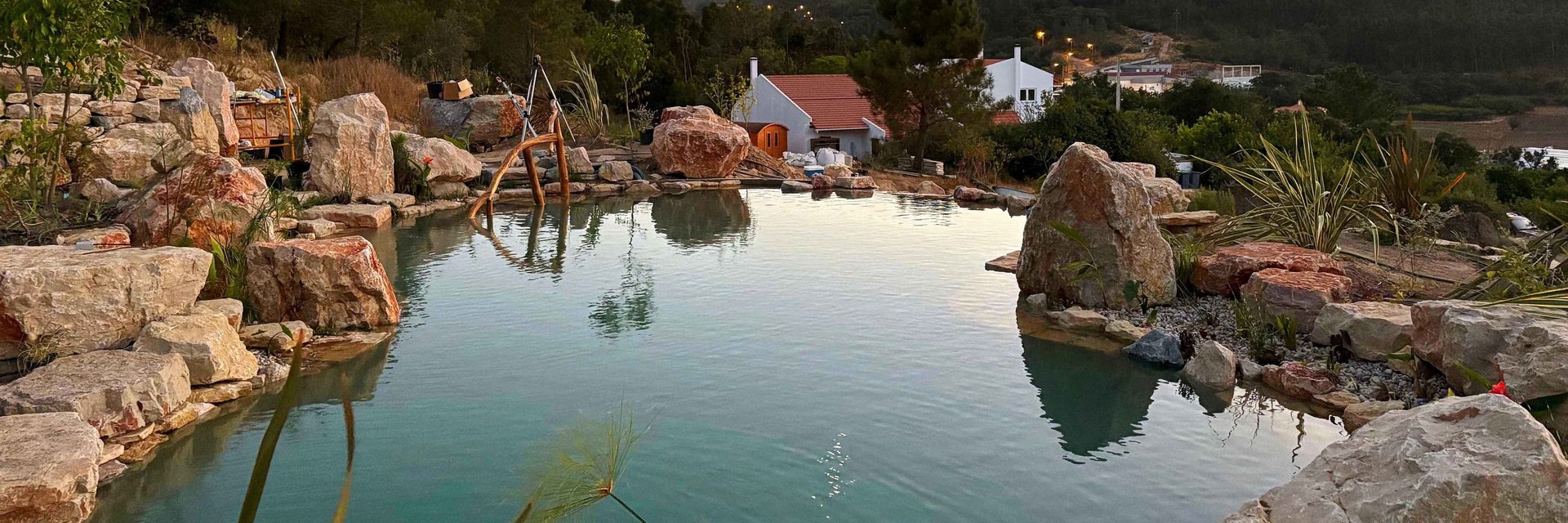
Most people considering a pool conversion start with one simple frustration: the water just doesn't feel good to swim in. Red eyes, itchy skin, that unmistakable chemical smell. The conversion process is more straightforward than most homeowners expect — and the benefits go far beyond just removing the chlorine.
1. Better health — immediately noticeable
The most immediate benefit of a natural pool conversion is the change in how the water feels on your body. Within the first swim, most people notice:
- No red eyes — chloramines (not chlorine itself, but its byproducts) are the primary cause of eye irritation. They're completely absent from natural pools
- No dry or itchy skin — chlorine strips the skin's natural oils; natural pool water is gentle and leaves skin feeling soft
- No chemical smell — that sharp "pool smell" is chloramines, not cleanliness. Natural pools have no odour
- Better for lungs — particularly important for children, asthmatics and regular swimmers. Breathing naturally above the water surface carries zero chemical exposure
- Safe for babies, pets and sensitive skin — no restrictions on who can swim
For families with children who swim frequently, this alone is often the deciding factor.
2. Lower running costs — year after year
A converted natural pool typically costs significantly less to run than a chemical pool. The savings compound over time:
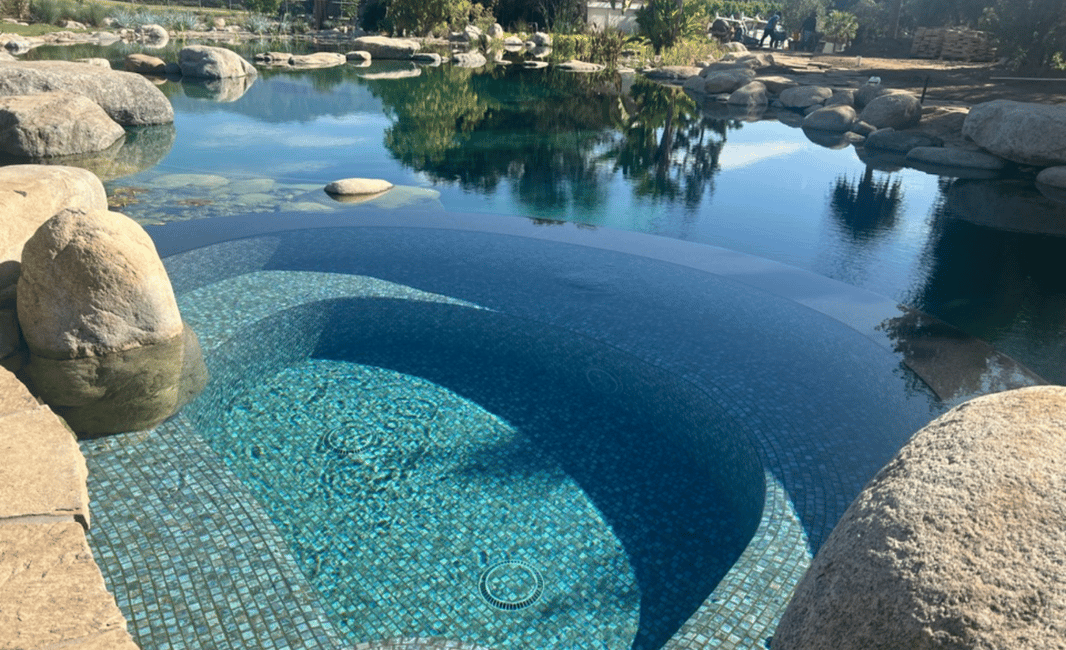
- Zero chemical spend — no chlorine, no stabilizer, no pH adjusters, no algaecides. The chemical budget drops to zero
- 70–90% less electricity — natural pools run on continuous low-pressure circulation rather than high-energy pressure filtration systems
- Lower equipment wear — gentle, continuous flow is far easier on pumps, seals and fittings than the surge-and-stop cycles of conventional systems
- No corrosion damage — chlorine and salt accelerate deterioration of stone, metal, and pool surrounds. Natural water is neutral — your investment lasts longer
Over a 10-year period, most converted pools recoup a significant portion of their conversion cost through energy and chemical savings alone.
3. Simpler maintenance
Chlorine pool maintenance is a continuous juggling act: test the water, adjust pH, add stabilizer, shock the pool after heavy use, check the salt cell, monitor chlorine levels. A natural pool replaces all of that with a much simpler routine:
- Skim the surface regularly to remove debris before it decomposes
- Backwash the mechanical filter as needed (typically every 2–4 weeks)
- Trim aquatic plants once or twice per season
- Replace the UV-C lamp once per year
No chemical testing. No balancing. No emergency shock treatments. The biological system manages water quality continuously and automatically.
4. Better for the environment
- Zero chemical discharge — backwash water from a natural pool contains no hazardous chemicals and can safely reenter drainage systems or be used for irrigation
- Dramatically lower electricity consumption — reduces your household carbon footprint
- Supports local ecology — even a small planted zone attracts dragonflies, frogs, birds and pollinators. The pool becomes part of a living ecosystem rather than a sterile structure
- Water reuse potential — natural pool water can often be used for irrigation, especially valuable in drought-prone regions like Portugal and California
5. Property value and lifestyle appeal
Natural pools are increasingly recognised by architects, landscape designers and property buyers as a premium feature — not just a pool, but a landscape statement. Key advantages:
- Visual distinction — a naturalistic or hybrid natural pool looks fundamentally different from a conventional installation and elevates the entire outdoor space
- Hospitality appeal — eco-resorts, retreats and holiday properties with natural pools consistently command higher occupancy rates and stronger guest reviews
- Permitting simplicity — in Portugal and many other regions, natural pools classified as ponds face fewer regulatory hurdles than chemical pools
- Future-proofing — as water regulations tighten and chemical restrictions increase globally, natural pools are positioned as the compliant, forward-thinking choice
Summary: Converting an existing pool to a natural swimming system gives you healthier water immediately, lower ongoing costs, simpler maintenance, a smaller environmental footprint, and a property feature that commands genuine admiration. Most concrete and lined pools can be converted — and the process is more straightforward than most homeowners expect. Natural pool conversions start from €15,000.