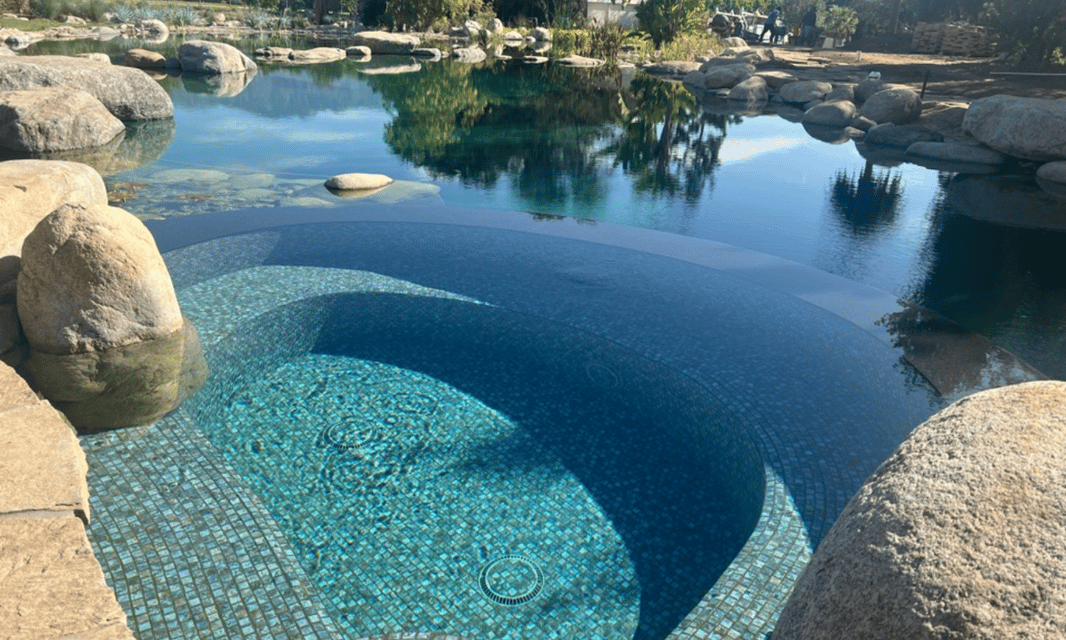
If you're planning to build or renovate a pool, the conversation has evolved well beyond the old debate of chlorine vs. saltwater. A third option — genuinely chemical-free natural pools — is now available and, for many homeowners and hospitality operators, it's the most compelling choice. Here's what you actually need to know.
Chlorine pools
Chlorine pools disinfect water chemically. While common and effective at killing pathogens, they come with well-documented downsides that affect daily comfort and long-term health:
- Respiratory irritation — chlorine fumes and chloramines can aggravate asthma and sensitive lungs, particularly in covered or indoor pools
- Skin & eye irritation — dryness, redness and rashes are common side effects of regular exposure
- Hair damage — chlorine strips natural oils, causing brittleness and discolouration
- Disinfection byproducts — chloramines (THMs) form when chlorine reacts with organic matter. These compounds have been linked to long-term health concerns in peer-reviewed research
- Chemical storage & handling — homeowners must store and manage hazardous chemicals, with associated safety risks and disposal requirements
- Ongoing cost — chlorine, stabilizer, pH adjusters and algaecides represent a continuous expense
Saltwater pools — not as natural as marketed
Saltwater pools are frequently promoted as a "natural" or gentler alternative to chlorine pools. In reality, the distinction is largely cosmetic.
The key fact: Saltwater pools are chlorine pools with a different delivery mechanism. Electrolysis converts salt into chlorine continuously — so the water still contains chlorine and its byproducts. Many of the same health effects apply.
Additional concerns specific to saltwater systems:
- Skin dryness & eye irritation — still present, though sometimes milder than directly dosed chlorine
- Salt aerosols — fine salt particles in the air around the pool can cause respiratory discomfort
- Corrosion risk — salt accelerates deterioration of metal fixtures, stonework and surrounding structures
- Environmental runoff — salt discharge into soil and drainage can damage gardens and affect groundwater
- Higher capital cost — salt chlorination systems cost more to install than standard chlorine dosing equipment
Natural swimming pools — genuinely chemical-free
Natural pools take an entirely different approach. Instead of chemicals, they use a combination of aquatic plants, biological filter media, and UV-C sterilisation to maintain water clarity and safety. The system mimics the way a healthy lake or spring stays clean — through ecology, not chemistry.
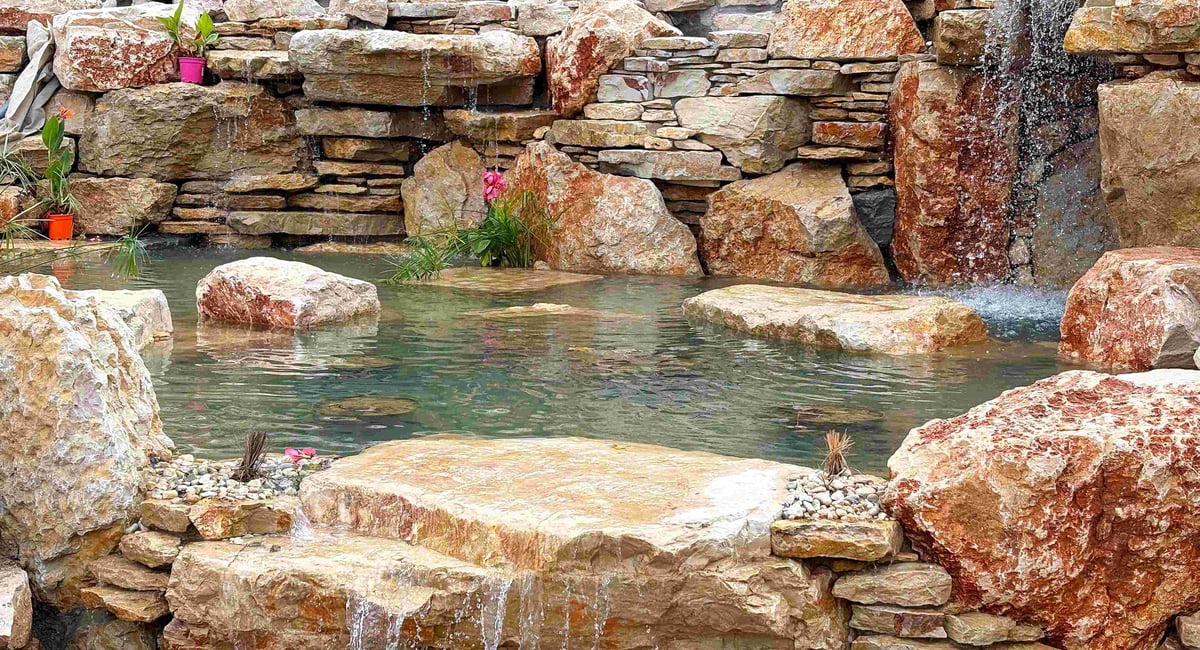
Benefits that chlorine and saltwater systems cannot match:
- Genuinely chemical-free — no chlorine, no salt cells, no stabilizer, no algaecides
- Healthier water — safe for children, sensitive skin, pets and wildlife; no chemical byproducts
- Lower energy use — biological systems operate at low pump speeds, typically 70–90% less electricity than conventional pools
- Lower running costs — no chemical purchases; maintenance is primarily plant care and filter backwashing
- Longer-lasting materials — no chemical corrosion; liners, stone and equipment last significantly longer
- Simplified permitting — in Portugal and many other regions, natural pools are classified as ponds rather than chemical pools, streamlining approvals
- Design flexibility — from formal geometric biopools to fully naturalistic swimming ponds integrated into the landscape
- Extraordinary swimming experience — living water feels fundamentally different to swim in; cool, clean and refreshing
Side-by-side comparison
Chlorine & Saltwater
Water treatment: Chemical — chlorine added directly or generated from salt. Health effects: Eye & skin irritation, chloramine exposure, respiratory concerns. Running cost: Ongoing chemical purchases, high energy from pressure pumps. Maintenance: Regular chemical balancing, testing, occasional shock treatments. Environment: Chemical discharge, salt runoff, high electricity consumption.
Natural Pools (Biopools)
Water treatment: Biological — plants, beneficial bacteria, UV-C sterilisation. Health effects: None — safe for sensitive swimmers, children, pets. Running cost: 70–90% less electricity; no chemicals to buy. Maintenance: Plant pruning, filter backwash, annual UV lamp replacement. Environment: Zero chemical discharge; supports local ecology.
The future of swimming
Across Europe and the U.S., natural pools are redefining outdoor living and hospitality design. They offer safe, chemical-free water, lower lifetime costs and effortless maintenance — all while supporting nature, not fighting against it.
Thanks to recent advances in eco-filtration technology, including UV-C sterilisation, compact biological filter modules and nanobubble oxygenation, natural pools now achieve the same clarity as a well-maintained conventional pool — without any of the chemical downsides.
For families, this is often the number-one reason to convert. The water simply feels better — and the body notices immediately.