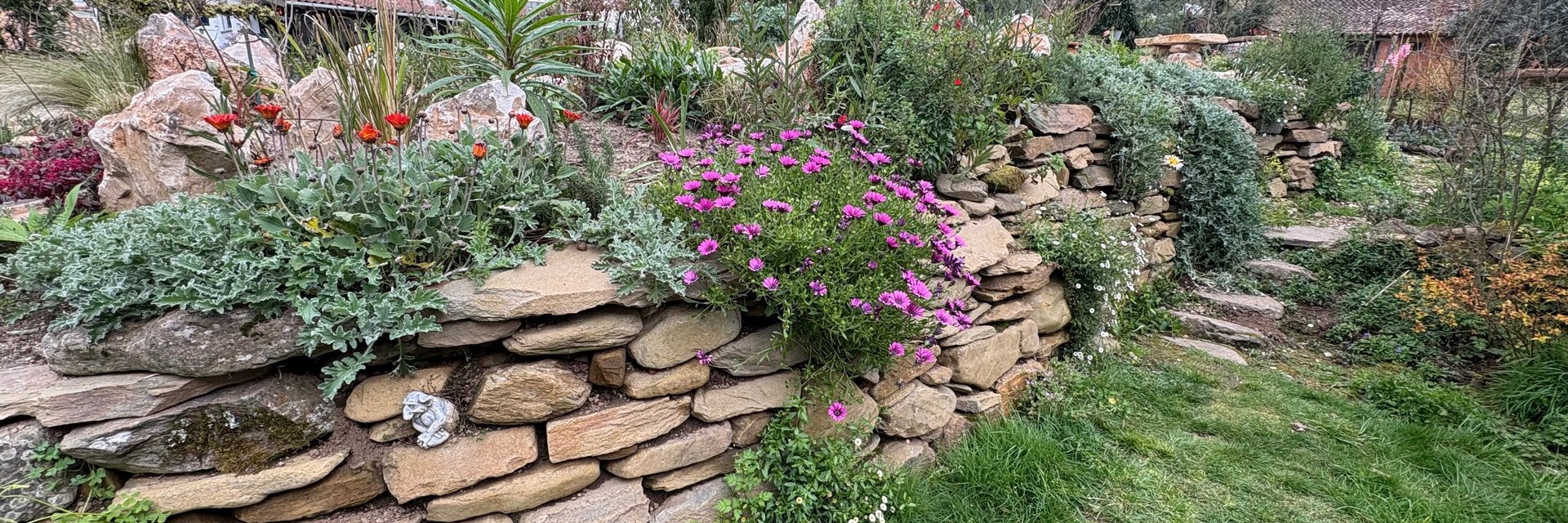
Modern construction has given us efficiency, scale, and structural strength. Yet in the process, something essential was lost — the intimacy between builder, material, and place. At Aqua Vitae, we believe those things belong together, and that the most extraordinary work happens at their intersection.
Rediscovering the soul of building
A wall built by a skilled mason or a structure shaped by a true craftsman carries more than strength — it carries intelligence. The knowledge of how stone stacks without mortar, how materials interlock to form natural joints, how clay and lime regulate humidity — these lessons were learned not in labs but in fields, forests and quarries over centuries.
Free-set stone walls, handcrafted joinery, and lime-based finishes once formed the backbone of resilient design. These materials aged gracefully, breathing with the seasons. They didn't fight their environment — they cooperated with it.
When we talk about sustainability, we too often mean efficiency metrics or carbon scores. Yet real sustainability lies in craftsmanship — in work that endures for generations and deepens in beauty as it weathers.
Biomimetic design — learning from nature's intelligence
Nature never separates function from form. Every curve of a coastline, every vein in a leaf, every root system beneath our feet is both beautiful and efficient. That's the essence of biomimetic design — building in ways that echo natural logic.
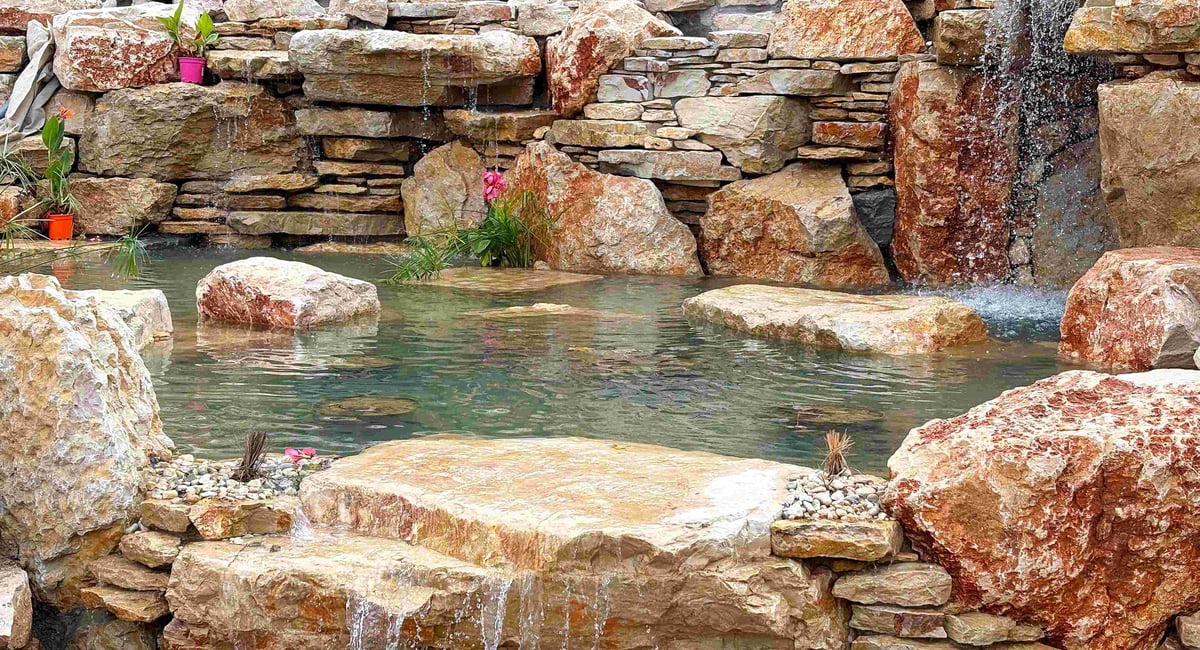
Our natural pools, terraces, and gardens are shaped by these principles:
- Water moves as it does in the wild — through gentle gradients and self-cleaning flow paths that oxygenate naturally
- Materials are chosen for their chemistry and their story — local stone, regional timber, and durable composites where needed; never materials that fight their environment
- Technology assists nature — UV sterilisation, nanobubble oxygenation and biological filtration provide modern precision within an ecosystem that still feels alive
- Structure disappears into its setting — the built environment completes the landscape rather than competing with it
Of the place, not on it
Architect Frank Lloyd Wright believed that great architecture should be "of the place, not on it." That philosophy guides everything we build. A well-designed project shouldn't compete with its surroundings — it should complete them.
When we finish a site, our goal is simple: it should look as though it's always been there. A pool nestled into the landscape. A wall growing out of the hillside. A terrace that belongs to the terrain rather than being imposed upon it.
That's not nostalgia. It's respect — for materials, for environment, and for time itself.
The Aqua Vitae method: We pair traditional wisdom — the knowledge of how materials age, breathe and interact — with cutting-edge water systems: UV-C sterilisation, biological filtration, and nanobubble oxygenation. The result proves that technology and tradition don't compete. They complete each other.
Building naturally in the modern age
Today, we have the ability to merge the precision of modern engineering with the poetry of craftsmanship — to build naturally, but not primitively. That combination is rarer than it should be, and more powerful than most builders realise.
To build naturally today means embracing both ancient wisdom and modern insight. It's precision engineering guided by ecological humility. The result isn't just sustainable — it's timeless.
This philosophy shapes every Aqua Vitae project — from the largest natural lakes to the most intimate courtyard pools. The question is never just "how do we build this?" It's "how do we build this so it belongs here?"