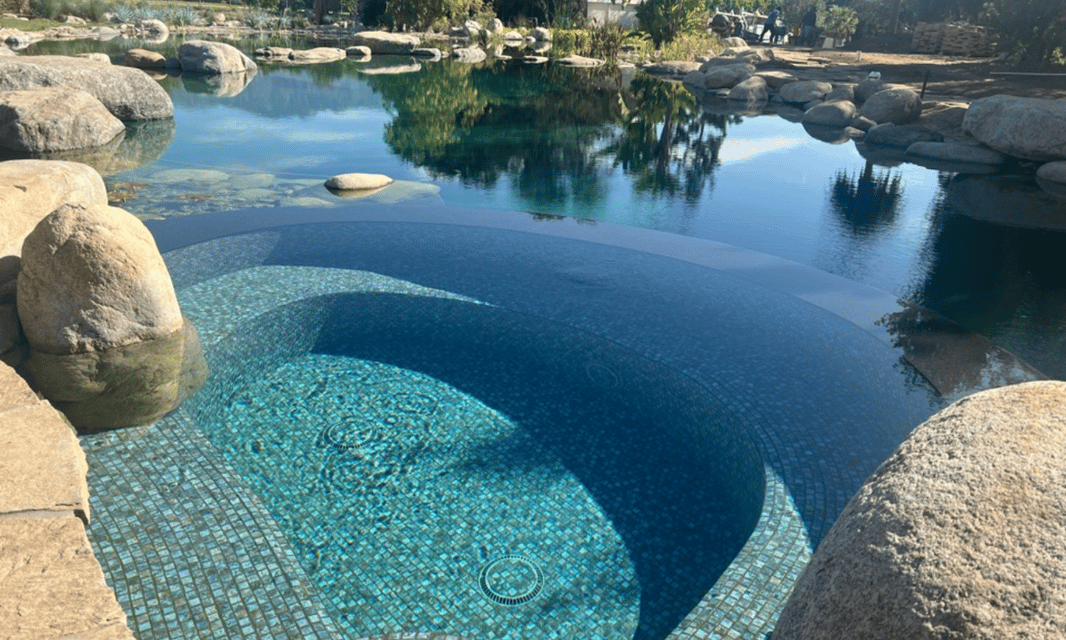
When people hear the words natural pool, one of the first questions is: "But is it safe to swim in?" It's a fair question. The idea of swimming in untreated, plant-filtered water can sound unfamiliar — especially to anyone used to the sterile clarity of a chlorinated pool. That's where UV sterilisation enters the conversation.
What UV sterilisation actually does
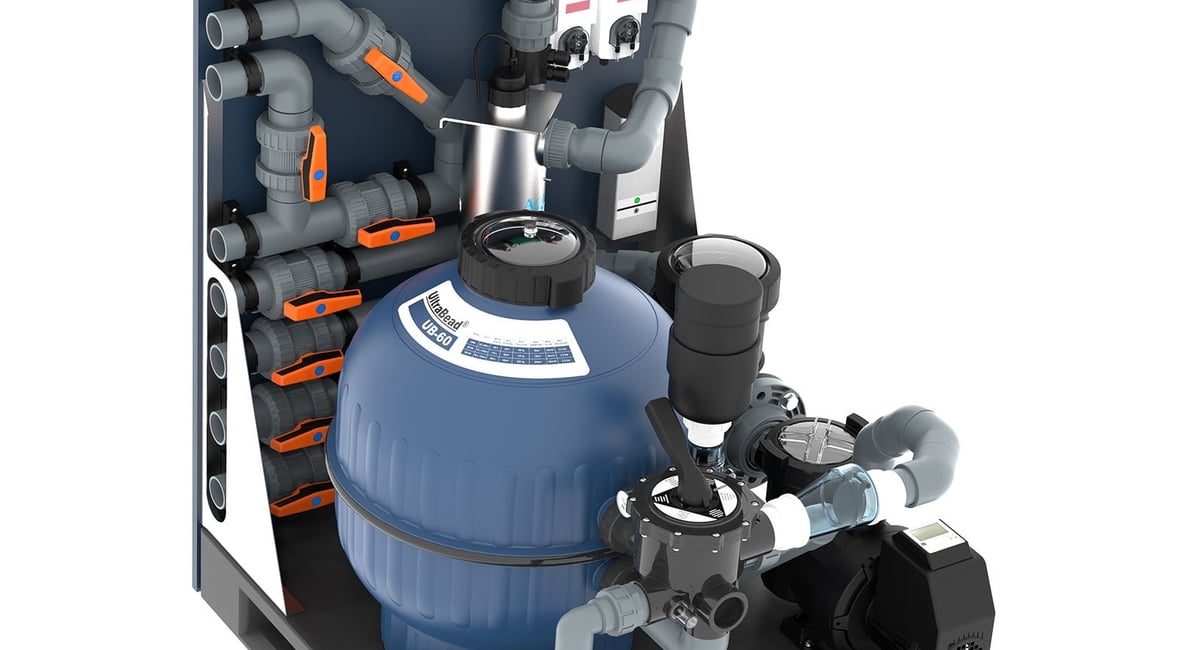
UV light (usually around 254 nanometres) damages the DNA or RNA of micro-organisms, preventing them from reproducing. It's a purely physical disinfection process — no chemicals are added to the water. When water passes through a UV chamber, bacteria, viruses and algae spores exposed to the light are inactivated.
The technology is widely used in drinking-water systems, aquaculture and even hospitals. In natural pools, it serves as a guardian — reducing pathogen load without dismantling the living web that keeps the pool self-balancing.
Benefits of UV in natural pools
- Pathogen control — inactivates harmful microbes quickly and without chemicals
- Algae prevention — neutralises free-floating algae spores before they colonise surfaces
- Water clarity — less suspended plankton, visibly clearer and even crystal-clear water
- Fully automatic — cannot be overdosed, no manual adjustment required
- No byproducts — no chloramines, no chemical odour
- Low maintenance — lamp replacement once a year, minimal energy draw
- No health issues — no sore red eyes, itchy skin, dry hair or breathing problems
- Psychological assurance — helps clients feel confident that "natural" still means "safe"
Limitations and nuances
What UV-C cannot do
Selective effect — only kills what passes through the chamber, not organisms already on surfaces or in plant material. No residual action — once water leaves the unit, it can be recolonised (which is fine for natural pools). Lamp maintenance — needs annual cleaning and bulb replacement.
What it works with
UV works best alongside biological filtration — not instead of it. The plants and bacteria handle the continuous work of nutrient conversion and oxygenation. UV acts as a safety net, neutralising pathogens in the circulating water without removing the broader biological ecosystem.
Does UV kill the "good" bacteria?
Only partly — and this is where the nuance lies. Most beneficial micro-organisms in a natural pool live in biofilms attached to gravel, stone or plant roots — outside the UV-C unit. Water only passes through the lamp briefly, so while UV-C reduces the microbial load in circulation, the core bacterial community remains intact in the regeneration zone.
Thus, UV-C acts as a safety net, not a steriliser of the whole ecosystem. The biological filter remains fully functional. This is the key insight that makes UV compatible with natural pool design.
The Aqua Vitae approach: We design systems where technology assists nature, not overrides it. Biological filtration and plant zones do the continuous work of nutrient conversion and oxygenation. UV sterilisation serves as a guardian — reducing pathogen load without dismantling the living web that keeps the pool self-balancing.
When to use UV — and when you might not need it
Recommended ✅
Smaller natural pools or hybrid systems with high bather load. Sunny sites prone to algae blooms. Hot climate installations (Middle East, California, Southern Europe). Clients who want maximum water clarity and confidence.
Optional 🔵
Large ponds with robust regeneration zones and limited direct sunlight. Ornamental water features with low human contact. Very large lakes where biological filtration alone maintains balance.
System sizing matters
UV units must be correctly sized for the water volume and flow rate of your specific pool. An undersized unit will not provide adequate pathogen control; an oversized one in a small system may slightly reduce microbial diversity. Sizing is a design decision made during the hydraulic schematic phase — not a purchase you make independently.
At Aqua Vitae, we specify UV units from Blue Lagoon and AquaForte — high-output amalgam bulb units that maintain approximately 80% intensity after one year, backed by a 3–5 year warranty.
Summary — UV sterilisation in a natural pool system
The UV unit acts as a safeguard, not a steriliser — neutralising pathogens in circulation while leaving beneficial bacteria in the biofilm and regeneration zones untouched. The result is crystal-clear, living water that is safe for swimming.
It is one component of a carefully designed system — not a standalone solution. When specified correctly and installed as part of an integrated natural pool design, UV sterilisation is what allows a natural pool to achieve the clarity of a chemical pool with none of the chemical downsides.